The Hamster Wheel That Drains You
Validation can quietly replace motivation, until you mistake the version of yourself people expect for the version you want to be.
A good career can quietly turn into a hamster wheel that drains you. You work on a hard, ambiguous problem, solve it, people praise the solving, and you pick up a bigger problem within the same domain. People start to expect you to work on that type of problem. Your salary increases over time, scope grows indefinitely. It turns into a wheel.
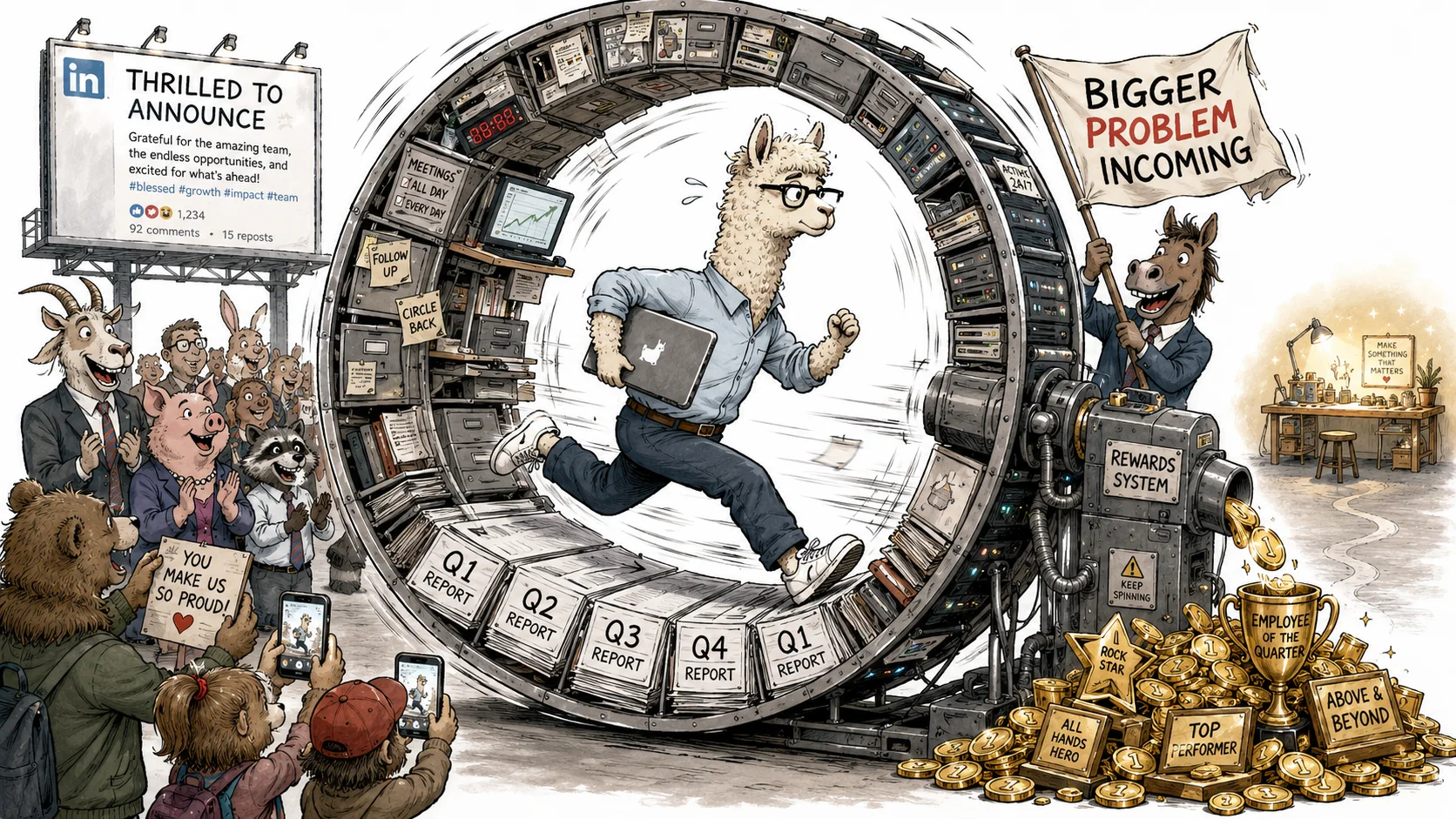
Being part of this wheel is hard to notice because it constantly feeds you validation. A senior engineer says you are unusually good at this kind of problem. Someone you respect says you should do more of it. People in your life admire the title, the ambition, the version of you that seems to be winning.
If the wheel is not aligned with what gives you energy, that validation can become a problem. It feels like momentum, so you keep going. You can keep looking successful while the rest of your life gets smaller. You stop reading about your interests. You have less energy for friends, projects, exercise, curiosity. Bad weeks take longer to recover from. Burnout comes easier because work keeps draining your energy, and you have nothing to replenish it.
Because it makes sense to everyone else, your discomfort looks suspicious even to you.
I have been stuck in this wheel the last couple of years. The work people kept validating was not always the work that gave me energy. I eventually ended up in a place where I had nothing that replenished my energy anymore, and I went independent as a result to try to break free.
The wheel follows you if you let it
Going independent looks like the obvious way off the wheel. Friends and former colleagues asked me about it once I went ahead, saying they had also been thinking about it. In a way, most of the people around me were running their own wheels that they wanted to escape.
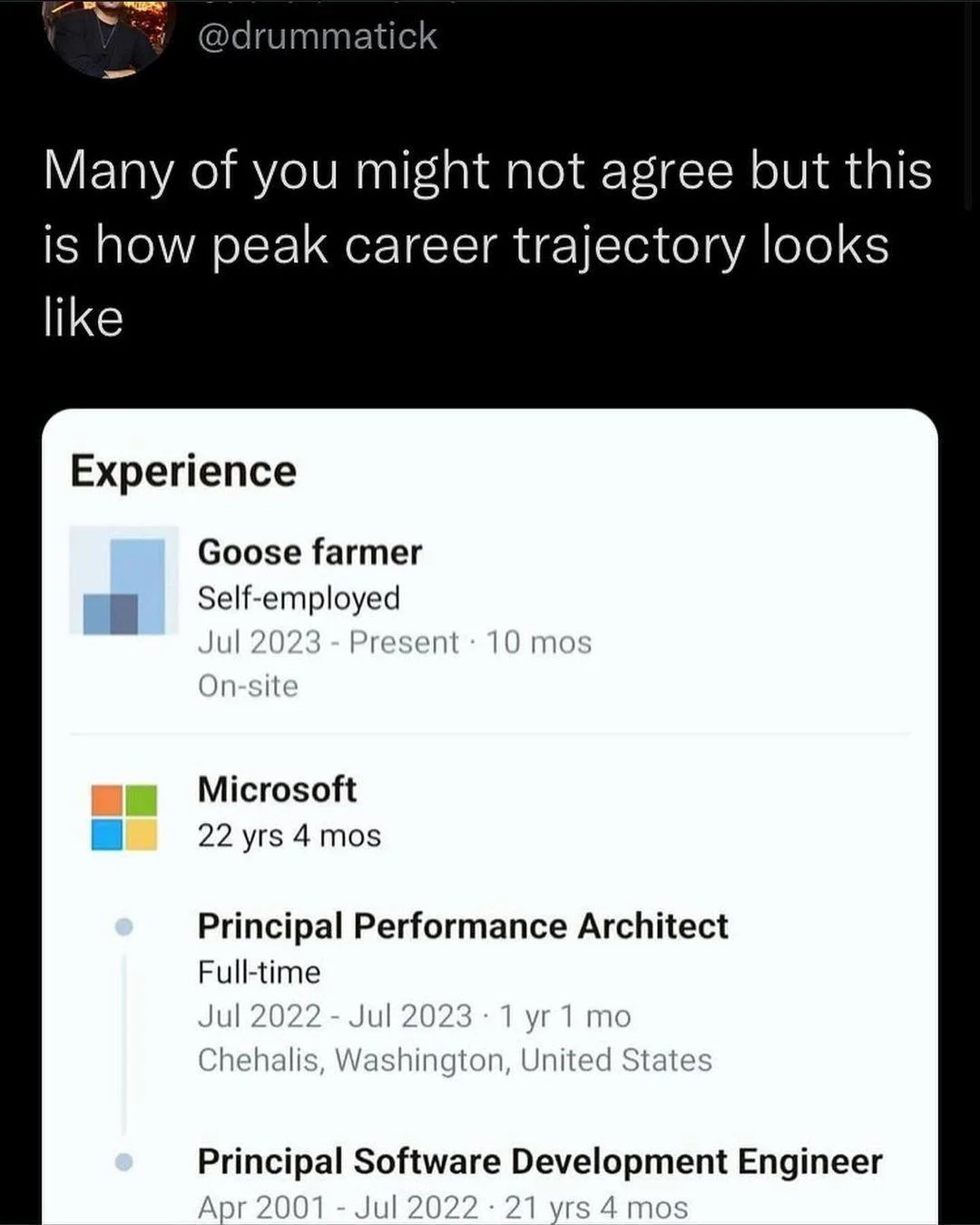
Independence as a way to break free from the wheel has almost become a meme. Just like the classic “I’ll become a farmer” joke everyone in software says at some point in their career.
The problem with independence is that you now have to sell something. People buy the part of you they already understand. For me, that meant consulting and advisory work for large organisations adopting AI: staying close to the frontier, translating what was changing, pulling slower organisations along. The work was useful, paid well, and made sense. It was also the same wheel in another form. The market rewarded the version of me it understood, so I kept becoming that version.
I told myself this was discipline. Keep selling what works. Keep funding the company. Keep proving I could do it alone. But discipline can also become a way to avoid noticing that the goal has changed.
Trust the work you return to
The clearest signal you are in this situation is that the work you keep getting rewarded for is not the work you return to when nobody is watching. Look at the tabs you leave open, the problems you explain to friends who did not ask, the work that still pulls at you before anyone validates it.
Naval Ravikant puts the test cleanly:

The word that matters is play. The work that feels like play may still be hard, commercially awkward, and difficult to explain.
Mine was safety at the frontier of AI. I kept returning to those problems at night, then talking myself out of them because I could not see a business around them. They are a cost centre, not a startup. So I built the sellable thing and left the work I actually thought about unbuilt.
Looking further back, the happiest time of my life had the same shape: years at Meta doing safety work. It prompted me to go back into employment, which meant dropping the founder identity and choosing the problems over the company I kept trying to wrap around them.
Not being a founder anymore felt like failure. Like I had failed some private test, and the version of me who could do it alone was the stronger one. It dialled my imposter syndrome all the way up. Rationally, I had learned things, built things, and shut something down for coherent reasons. I still felt like I was retreating. Stopping means giving up my own perceived identity, and that was hard. I suspect this is where many people get stuck as well.
What I missed
I made the mistake of treating validation as direction. I kept taking the fact that people would buy a version of me as evidence that I should keep becoming him.
This is not a problem for everyone, but I do believe a large portion of ambitious people hit it at some point. The work they are rewarded for starts to drift from the work they would choose if nobody were watching.
I wish I had asked myself this earlier. I waited until my early 30s, partly because I could keep succeeding at the legible thing, and partly because the trigger was probably my own midlife crisis. I am happy with the result. Still, I wish I had paid closer attention in my 20s, when the cost of exploration was lower and the signal was already there.
Related: Building on a Moving Train.